
-
You are viewing the forum as a Guest, please login (you can use your Facebook, Twitter, Google or Microsoft account to login) or register using this link: Log in or Sign Up
You are using an out of date browser. It may not display this or other websites correctly.
You should upgrade or use an alternative browser.
You should upgrade or use an alternative browser.
Black root causes (Valisneria)
- Thread starter senrab05
- Start date

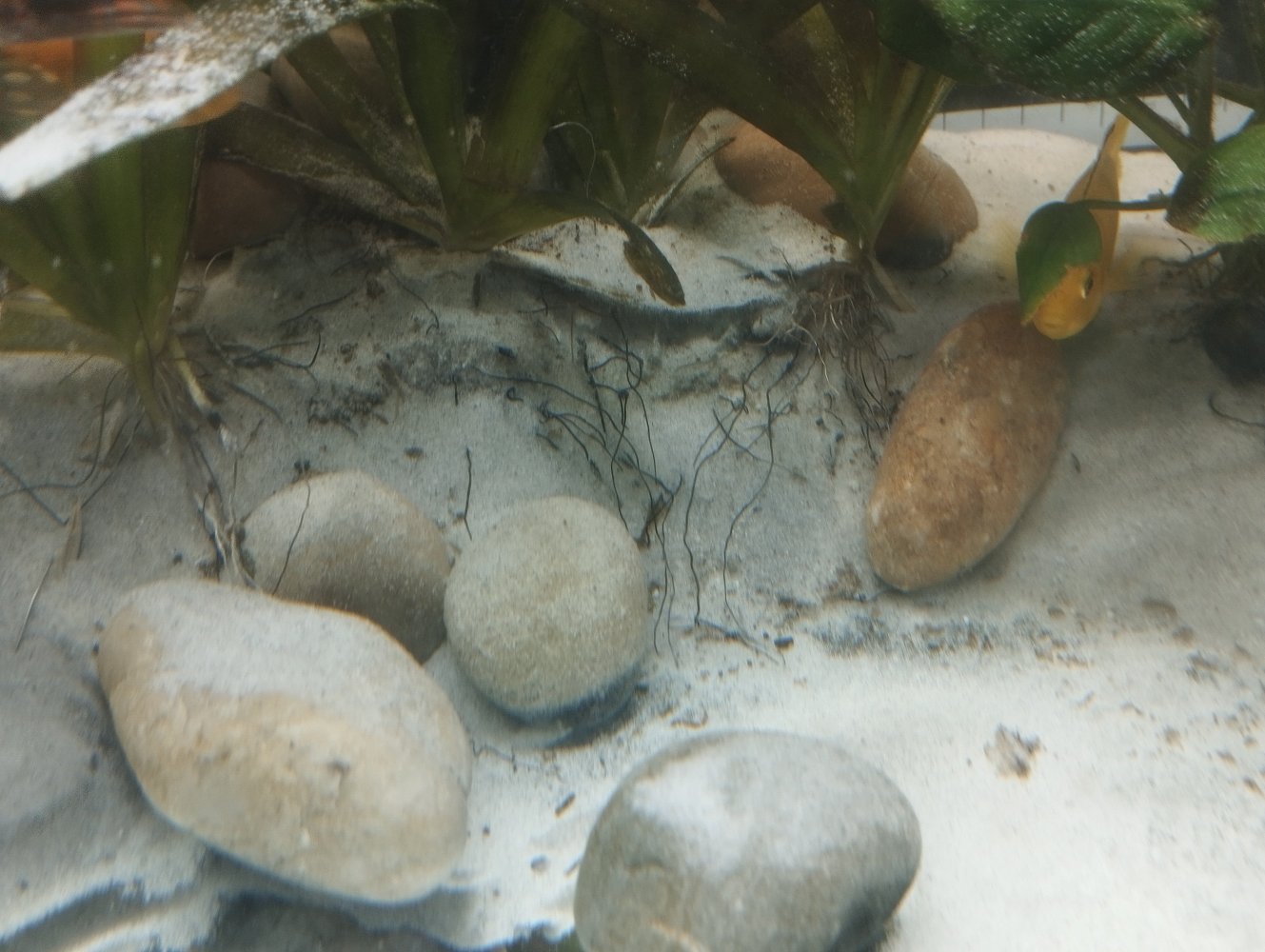

Have you pulled them up and sniffed the roots? I think it's most likely anaerobic conditions and the roots have started to rot.Is anaerobic bacteria 100% the cause of black roots, or could it be a deficiency?
Oh yeah I definitely have an anaerobic problem, hence the substrate change. No need to sniff them, the underside of stones and sand stinks! I checked some of the 1-2 star reviews for the sand I used and it seems a common problem, but the people who have even less knowledge than me (somehow this is a possibility 🙂 ) were saying the sand "went mouldy" xDHave you pulled them up and sniffed the roots? I think it's most likely anaerobic conditions and the roots have started to rot.
Should I snip off the black roots before putting them back?

Mix some gravel in with the sand....that may help to stop the sand becoming compacted and turning anaerobic!
Unfortunately none to hand! However I'm changing from the previous 0.1mm sand to 1-1.2mm pool filter sand. I will also keep the substrate a bit shallower, I think max 6cm under the vals.Mix some gravel in with the sand....that may help to stop the sand becoming compacted and turning anaerobic!

How long do you keep the plants in this tank? I don’t think its anaerobic area that caused it. Aquatic plants usually adapt to this kind of environment, and I keep my emersed plants in pots with rotten egg smell substrate with no problems.
The plants themselves weren't doing bad, the problem is the bacteria was getting everywhere, under stones etc. The plants are about 5 months old, started with two which heavily melted, now I think it's 18-20 in total.How long do you keep the plants in this tank? I don’t think its anaerobic area that caused it. Aquatic plants usually adapt to this kind of environment, and I keep my emersed plants in pots with rotten egg smell substrate with no problems.
Yes, remove all black parts. If you have nothing whit left, it's likely that plant won't survive anyway, so put onto compost. Those that still have white roots can be re-planted once all black parts have been removed.Should I snip off the black roots before putting them back?
Yes, remove all black parts. If you have nothing whit left, it's likely that plant won't survive anyway, so put onto compost. Those that still have white roots can be re-planted once all black parts have been removed.
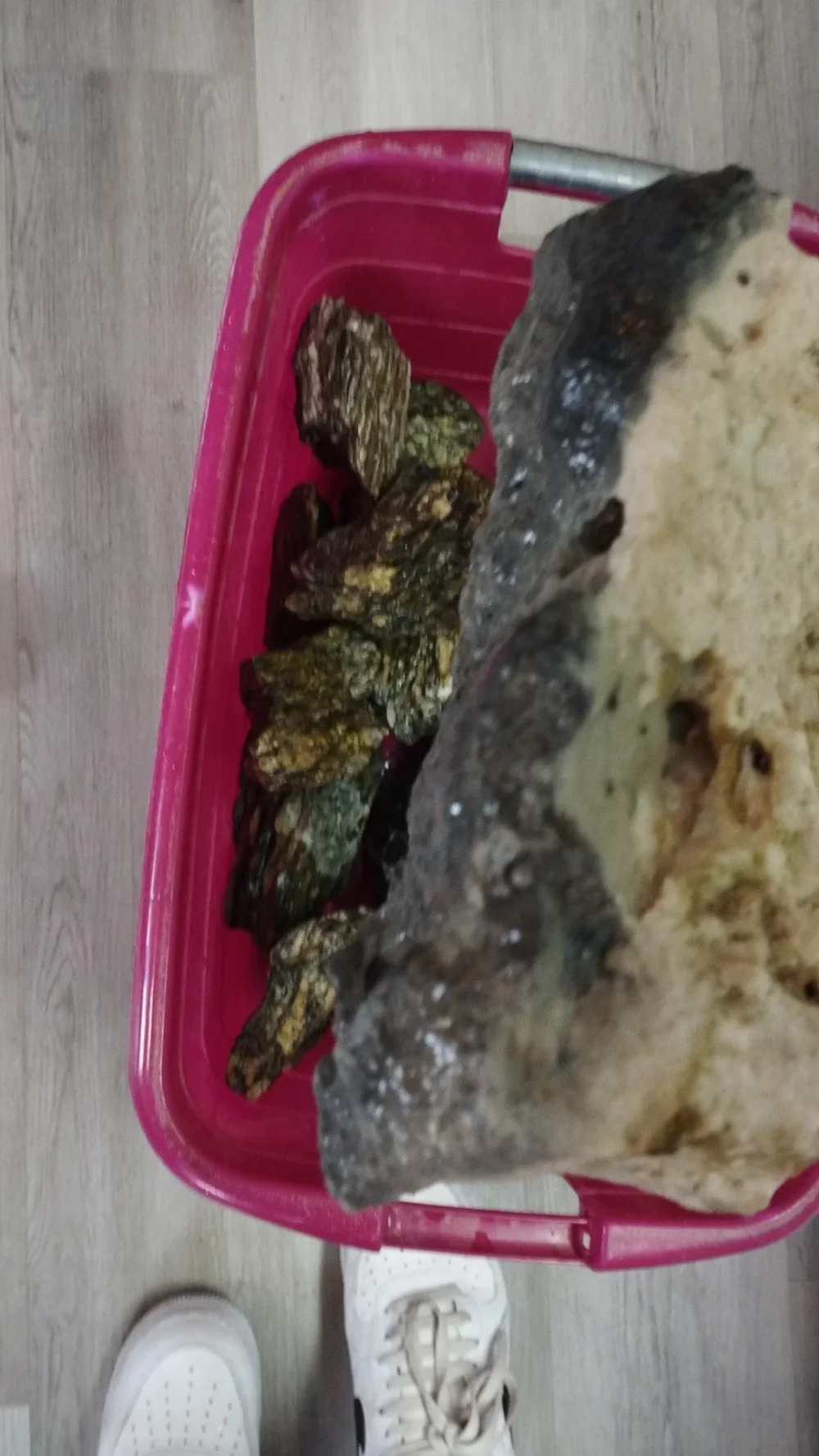
I removed parts of it, the roots weren't any weaker/different in texture to the white ones though, I tried pulling them and they stayed as well as the white ones, I think it was anaerobic bacteria. The underside of stones also turn the same colour. Below is an image of a stone from a few weeks back.
I clean my tank like crazy but ultimately I think the oxygen just couldn't get through that sand past 2cm deep.

Bradders
Member
Where did you hear that aquarium plants adapt to anaerobic conditions? I would have thought that aquatic plants need oxygen at their roots, especially with relatively limited dissolved oxygen within the water column.Aquatic plants usually adapt to this kind of environment.
Would it not be due to the fact that emersed plants can rely on leaves with huge access to oxygen and CO2?I keep my emersed plants in pots with rotten egg smell substrate with no problems.
I don't have the same quote-fu abilities that others have, but I'm sure that I read many times in this forum that plants pump oxygen through their roots to nourish and cultivate the microbiote around the roots as is needed by the plant.Where did you hear that aquarium plants adapt to anaerobic conditions?
Where did you hear that aquarium plants adapt to anaerobic conditions? I would have thought that aquatic plants need oxygen at their roots, especially with relatively limited dissolved oxygen within the water column.
Would it not be due to the fact that emersed plants can rely on leaves with huge access to oxygen and CO2?
If it's any help, my substrate was extremely anaerobic. It smelt like Hydrogen Sulfide, when you took it out, the sand was completely grey from the bacteria as soon as you went 1cm deep, but the plants were doing very well.
From this forum.Where did you hear that aquarium plants adapt to anaerobic conditions?
Same, I’ll tag @dw1305.I don't have the same quote-fu abilities that others have, but I'm sure that I read many times in this forum that plants pump oxygen through their roots to nourish and cultivate the microbiote around the roots as is needed by the plant.
Bradders
Member
I don't have the same quote-fu abilities that others have, but I'm sure that I read many times in this forum that plants pump oxygen through their roots to nourish and cultivate the microbiote around the roots as is needed by the plant.
Cool. I did not know that plant roots can exist in truly anaerobic conditions and thrive. I thought it was more survival than optimum, if that makes sense.From this forum.
I think I found the thread that discussed about this. Bubbling substrateCool. I did not know that plant roots can exist in truly anaerobic conditions and thrive. I thought it was more survival than optimum, if that makes sense.
Bradders
Member
Sorry, that link does not work.I think I found the thread that discussed about this. “Bubbling substrate“
Last edited:
I edited it, should work now.I have a feeling that the plants were probably dealing more with anoxic conditions rather than anerobic.
Sorry, that link does not work.
Bradders
Member
I think you are referring to the below. Got it! Thanks!
My thoughts are that some of the roots were in areas where oxygen was OK (or just low), such as the top 1cm of sand/substrate @senrab05 mentioned. So that makes sense in terms of anaerobic and plants being OK. I guess, as you went down the substrate (and assuming that smell is hydrogen sulfide), that is where the anoxic zone is, and that is what caused those sections of the roots to turn black. I think?! 😀It is really <"just down to oxygen for me">. It would depend a little bit on the substrate, but I wouldn't be too worried, as long <"as I had some rooted plants"> This is the rhizome of Nelumbo, and it has some fairly spectacular "pipe work". Because sulphate (SO4---) is fairly low down the list of electron acceptors, you need to have a complete absence of oxygen and some <"pretty low ORP values"> before the sulphate is fully reduced and H2S is formed.
I'm not sure if its the root rotting or simply the bacteria on the root. The root isn't squishy/weak like what's described for rotten roots.. it's just black.I think you are referring to the below. Got it! Thanks!
My thoughts are that some of the roots were in areas where oxygen was OK (or just low), such as the top 1cm of sand/substrate @senrab05 mentioned. So that makes sense in terms of anaerobic and plants being OK. I guess, as you went down the substrate (and assuming that smell is hydrogen sulfide), that is where the anoxic zone is, and that is what caused those sections of the roots to turn black. I think?! 😀
In addition, the root had continued growing through the anaerobic substrate, so if it's rotten, it's still growing.
